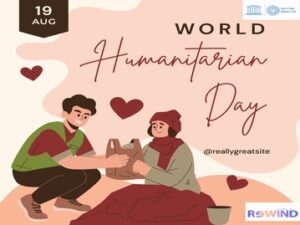
On August 19, the world observes World Humanitarian Day: a time to honour the dedication and courage of humanitarian workers while standing in solidarity with people affected by crises across the globe.
Despite their life-saving mission, humanitarian workers often face violence, injury, detention, and even death while assisting people affected by conflicts and disasters. International humanitarian law requires that they be respected and protected so they can safely deliver essential aid. When these workers are targeted, it not only endangers their lives but also disrupts critical services such as food, healthcare, and emergency relief, putting vulnerable communities at even greater risk.
Background
World Humanitarian Day has its origins in the tragic bombing of the Canal Hotel in Baghdad, Iraq, on 19 August 2003, where 22 humanitarian workers, including UN Special Representative Sergio Vieira de Mello, lost their lives. In recognition of their sacrifice, the United Nations General Assembly officially designated 19 August as World Humanitarian Day in 2008. Led by the United Nations Office for the Coordination of Humanitarian Affairs (OCHA), the annual campaign raises awareness about humanitarian crises, advocates for the dignity and well-being of affected communities, and highlights the importance of protecting humanitarian workers worldwide.
What Needs To Be Done?
Words of concern alone are not enough to protect humanitarian workers. Real change requires concrete action, accountability, and strict adherence to international humanitarian law.
This World Humanitarian Day, we call for:
- Protection of civilians and humanitarian workers in accordance with international humanitarian law.
- Safe and unrestricted humanitarian access so that life-saving assistance reaches those in need without delay.
- An end to the arbitrary arrest and detention of humanitarian personnel and the release of those unlawfully detained.
- Thorough and impartial investigations into attacks on aid workers, with those responsible held accountable.
- Support for survivors and the families of humanitarian workers who have been injured or lost their lives while serving others.
- Stronger safety measures, including security training, appropriate equipment, mental health support, and the use of technology to protect humanitarian personnel.
UNESCO BMW’s Involvement
At UNESCO Body and Mind Wellness, we believe that humanitarian action begins with compassion, empathy, and a shared sense of responsibility toward others. On World Humanitarian Day, we stand in solidarity with humanitarian workers and communities affected by conflict, disasters, and crises around the world. Through our initiatives that promote mental well-being, resilience, cultural understanding, and human connection, we reaffirm our commitment to fostering a more compassionate, inclusive, and peaceful world where dignity, kindness, and humanity remain at the heart of every action.
By
Fiza Faryad
Bibliography: