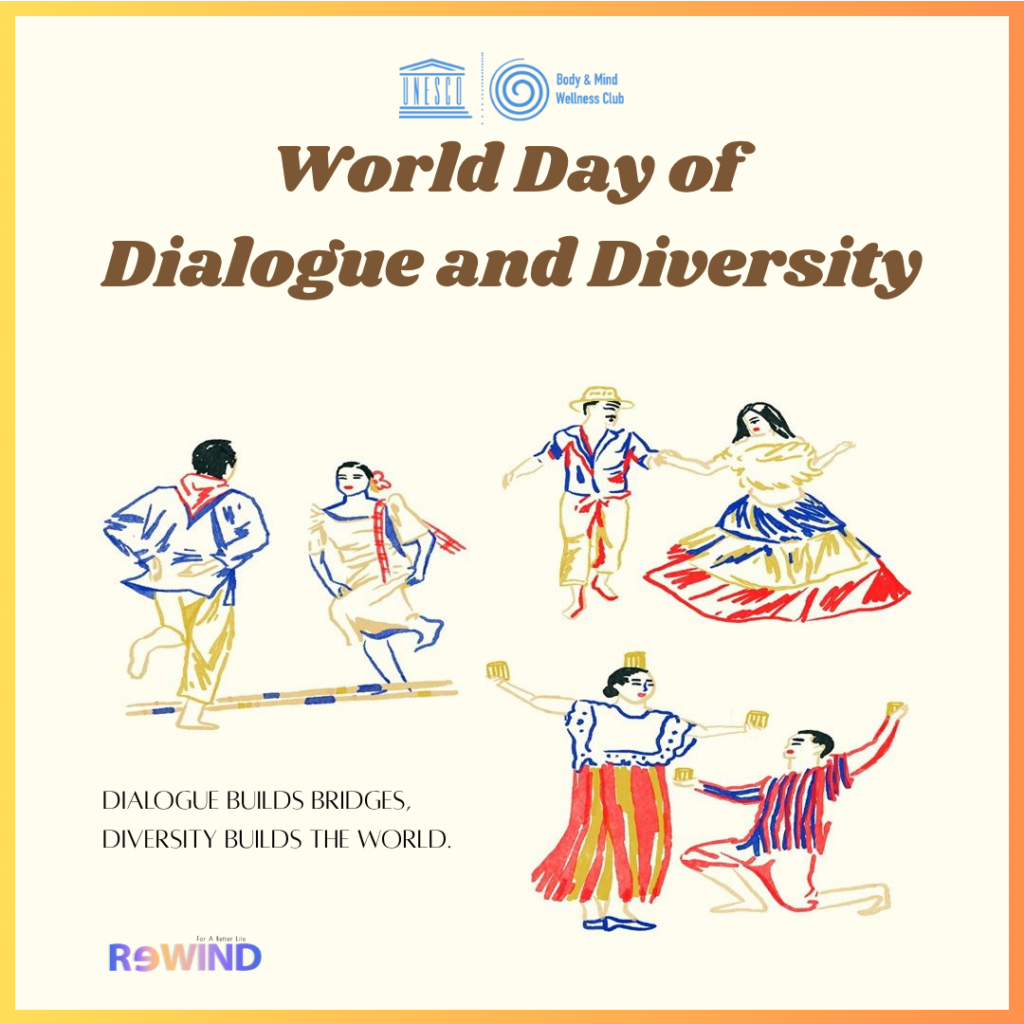
Dialogue Builds Bridges, Diversity Builds the World.
The World Day for Cultural Diversity for Dialogue and Development, a global campaign spearheaded by the United Nations and supported by UNESCO, is observed annually on May 21. In an increasingly interconnected globe, this celebration emphasizes the transforming power of cultural diversity in promoting peace, economic progress, and international collaboration.
Origin and Establishment
The Universal Declaration on Cultural Diversity, which was endorsed by UNESCO in 2001 and acknowledged culture as a common human legacy and a major force behind development, laid the groundwork for today.
May 21 was formally declared the World Day for Cultural Diversity for Dialogue and Development by the United Nations General Assembly in 2002. In order to address growing cultural divides and to encourage communication as a means of achieving peace and stability, this resolution was introduced.
Why This Day Matters
Cultural diversity is a significant economic advantage as well as a social value. Studies reveal that:
- Nearly 6.2% of the world’s workforce is employed in the cultural and creative industries, which account for more than 3.1% of the world’s GDP.
- The tourism and creative industries expand by up to 20–25% in nations that actively encourage cultural interchange, enhancing their standing internationally.
- Workplaces that are inclusive and diverse have a 35% higher chance of outperforming rivals, which boosts creativity and output.
Cross-border cultural exchange improves a nation’s reputation abroad and increases its appeal for foreign investments, trade agreements, and collaborations. Future international agreements and partnerships are frequently shaped by cultural diplomacy, which frequently plays a quiet but crucial role. Millions of young people under 30 are employed in the creative economy, which is actually one of the industries with the greatest rate of growth in the world. Because people with intercultural abilities are becoming more and more recognized in international job markets, cultural openness also increases employability.
Beyond the realm of economics, cultural discourse is essential to lowering crime and violence. Research indicates that:
- Stronger foundations for intercultural discussion are associated with up to 30% fewer instances of hate crimes and societal unrest.
- Programs for community-based cultural exchange greatly increase collaboration and confidence.
People gradually comprehend, respect, and even adopt constructive behaviors from one another when they interact with people from diverse cultures. This promotes harmonious coexistence, dispels stereotypes, and lessens prejudice. With over 280 million foreign migrants in today’s globalized globe, cross-cultural interaction is unavoidable. Diversity fosters creativity and innovation, but it also necessitates deliberate efforts to be inclusive.
This celebration is in line with the 2030 Sustainable Development Goals of the United Nations, which emphasize that mutual tolerance and cultural understanding are essential to achieving sustainable progress.
Role of UNESCO BMW and ReWIND
The goal of this worldwide celebration is actively supported by organizations like UNESCO Body & Mind Wellness (BMW) and its program ReWIND.
At UNESCO BMW, we prioritize encouraging youth involvement and cultural awareness, disseminating content that emphasizes global challenges and diversity, and promoting communication as a means of peacekeeping so that young people around the world understand the importance of equality beyond borders, disabilities, and identities. Furthermore, these values are further advocated and taught in our Rewind program. This program offers a unique platform for collaboration and cultural exchange at a global level- encouraging open communication across communities, ages, and other barriers. But most importantly, through kindness and careful guidance, we encourage all our members to openly express their opinions and experiences. Thus, both projects contribute to a more inclusive world by strengthening intercultural understanding.
References
- https://www.unesco.org/en/days/cultural-diversity-dialogue-development
- https://www.un.org/en/observances/cultural-diversity-day
- https://www.migrationdataportal.org/international-data?i=stock_abs_&t=2024
- https://www.timeanddate.com/holidays/un/world-day-cultural-diversity-dialogue
- https://nationaltoday.com/world-day-for-cultural-diversity-for-dialogue-and-development/