The Origin
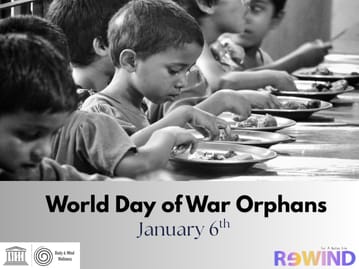
World Day of War Orphans is observed every year on 6 January. This day is often marked to raise awareness about the specific vulnerabilities of children who lose one or both parents due to war and armed violence. The day was initiated by a French organisation, SOS Enfants en Détresse, which works to restore normalcy and care in the lives of children affected by conflict.
Although its exact origins are not well documented, the purpose is clear: to honour the losses war orphans endure, raise public awareness, and encourage governments, international bodies, and civil society to advocate for their rights through campaigns and solidarity events. The World Day of War Orphans keeps the focus on children who are often overlooked in peace negotiations, ceasefire talks, or reconstruction planning. It urges policymakers to recognise that rebuilding societies after war must include targeted support for children who have lost their families, not only physical infrastructure.
Who Are War Orphans?
A war orphan is commonly understood as a child who has lost one or both parents because of war, conflict, or related violence, including displacement and targeted attacks on civilians. Many such children have not only lost their caregivers but have also experienced bombings, forced migration, or life in militarised areas.
Not all war-affected children are formally classified as “orphans”, yet they may live in similar conditions, separated from family, placed in institutions, or left to survive on the streets. As conflicts become more prominent in regions such as parts of the Middle East, Africa, and Eastern Europe, the number of children living without secure parental care continues to grow.
The Impact of the Crisis
Global estimates suggest that more than 140–150 million children worldwide have lost one or both parents for various reasons, with war and conflict among the major drivers in some regions. In war zone countries such as Syria and South Sudan, ongoing violence has left hundreds of thousands of children without parents and exposed to displacement, exploitation, and recruitment by armed groups.
Conflict has also pushed around hundreds of millions of children into areas where they live under the constant threat of violence, making them highly vulnerable even if they are not yet orphaned. These conditions erode access to basic services like food, water, shelter, education, and healthcare, compounding the trauma of losing a parent.
Challenges Faced by War Orphans
War orphans carry deep emotional wounds, including grief, post-traumatic stress, and feelings of abandonment that can last a lifetime without proper psychosocial support. Many struggle with nightmares, anxiety, and behavioural changes after witnessing the deaths of loved ones or the destruction of their homes.
Alongside psychological distress, they often face extreme poverty, homelessness, and a lack of access to schooling and healthcare. Without adult protection, these children are at heightened risk of child labour, trafficking, early and forced marriage, and recruitment as child soldiers. Children with disabilities in conflict zones face even greater risk of neglect and violence and are more likely to be abandoned in institutions.
UNESCO BMW’s Involvement
For UNESCO BMW, this day reinforces its mission to advance education, peace, and social equity. The organisation works to support war orphans, ensuring they receive protection, care, and real chances to rebuild their lives. UNESCO BMW helps drive this mission by inspiring individuals and communities to take action, whether by donating to support children in need or contributing to programs that provide them with a safe and nurturing environment. Professionals like teachers, counsellors, and mental-health specialists can also make a meaningful impact by volunteering their expertise to help children heal, learn, and adapt.
UNESCO BMW’s efforts only grow stronger when more people get involved; every contribution, every shared message, every volunteer hour pushes the cause forward and helps give every child the future they deserve. By listening to the experiences of war orphans, societies can confront indifference, and they nurture greater empathy, responsibility, and long-term commitment to war orphans’ well-being.
UNESCO BMW’s Vision
UNESCO BMW’s vision is a world where no child is left behind. By championing the rights of war orphans and ensuring they have access to education and care, UNESCO BMW aims to create a global community rooted in compassion and equality.
– Ayesha Khalid
Bibliography:
● https://unescobmw.org/2024/12/27/world-day-for-war-orphans-6th-january-2025/
● https://nationaltoday.com/world-day-of-war-orphans/
● https://www.unicefusa.org/what-unicef-does/emergency-response/conflict
● https://uacua.org/how-many-orphans-in-the-world-2025-truth/