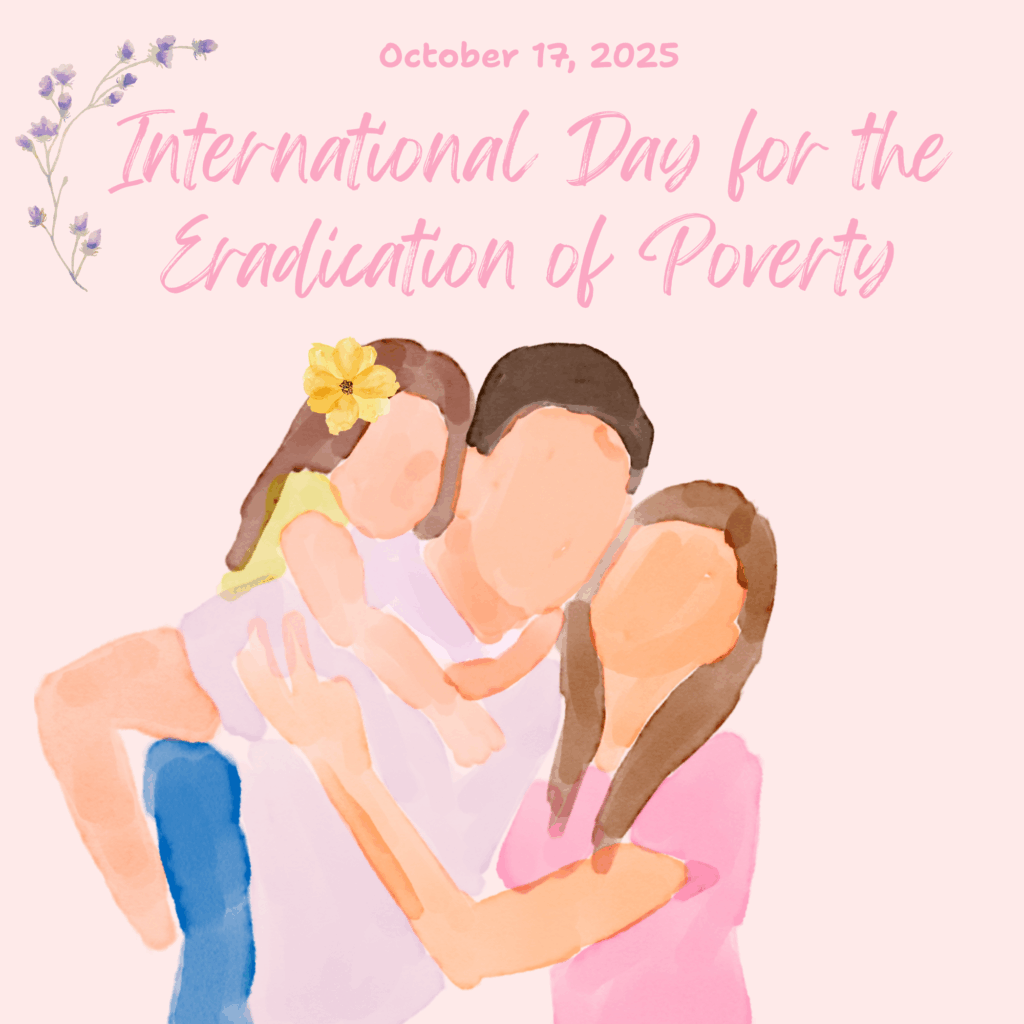
Every day, we are surrounded by people. The train, at the mall, school, home, the workplace, and so many others. Yet we forget those who are forced to live in slums, inhuman conditions and hunger. We forget the impoverished.
The Beginning of a Movement
The International Day for the Eradication of Poverty has its roots in a powerful demonstration that took place on October 17th, 1987. That day, over a 100,000 people gathered at the Trocadéro, where the Universal Declaration of Human rights was signed in 1948. These individuals, led by Father Joseph Wresinski, the founder of the International Movement ATD, came together to honour the victims of extreme poverty, violence and hunger. During the gathering, a commemorative stone was unveiled with the following inscription, which has since been replicated around the world:
“Wherever men and women are condemned to live in extreme poverty, human rights are violated. To come together to ensure that these rights be respected is our solemn duty.”
This powerful message led the United Nations General Assembly to officially declare October 17th as the International Day for the Eradication of Poverty through Resolution 47/196 on December 22, 1992. The UN observance, which began in 1993, seeks to raise awareness of the need to eradicate poverty and destitution and to acknowledge the efforts and struggles of people living in poverty, recognising their crucial role in the fight against it.
The Theme
This year the 2025 theme is: Ending social and institutional maltreatment by ensuring respect and effective support for families. This is because poverty is more than a lack of freedom. It’s a multidimensional issue that includes lack of respect, dignity, and access to basic rights. Often, the people in poverty suffer more from systematic discrimination and mistreatment from the very institutions that are meant to help them. Therefore, the theme also brings attention to the undermining of people’s self- worth and agency.
Consequently, manifesting in mistrust, negative attitudes and criminal behaviour; further resulting in the establishment of discriminatory policies. And most importantly, this year, the world dives in to explore how maltreatment disproportionately affects parents and children: instead of being seen as families in need of support, parents are often told to have failed without having their living conditions accounted for.
Unless action is taken now, the cycle of poverty, mistrust and separation will continue across families, classes and borders. In essence, this year’s theme is a call to action. It is urgent to governments, civil society, and people to move beyond simply providing financial aid. It’s high time to focus on creating a world where people in poverty are helped, treated with dignity, their rights are respected, and institutions are built to support them and not suppress or punish them or their families.
UNESCO BMW: WHERE ACTION IS PRIORITY
At UNESCO BMW, we believe that people can only spread awareness if people are open. Thus, in our Rewind programme, we offer meditation and cultural seminars- free of cost so that people from all walks of life can attend and gain valuable insights. Furthermore, with our plethora of youth exchange programmes, arts and handicraft exhibition alongside online engagement have allowed us to share UNESCO’s mission of “Ending poverty in all its forms, everywhere (SDG 1)”.
We firmly believe that charity begins at home, so here are a few ways we think you can make a difference:
- Educate Yourself: Take the time to understand the root causes of poverty, both locally and globally. Learn about the systemic issues, such as social and institutional maltreatment, that perpetuate the cycle of poverty. This knowledge will enable you to make informed decisions and advocate for effective change.
- Support Reputable Organizations: Research and donate to charities and non-governmental organizations (NGOs) that have a proven track record of fighting poverty effectively. Look for organizations that empower local communities, provide education, access to healthcare, and economic opportunities. You can also support microfinance initiatives that offer small loans to entrepreneurs in developing countries.
- Volunteer Your Time and Skills: Many organizations need volunteers to support their work. This could be anything from serving at a local food bank or soup kitchen to using your professional skills to help an NGO with marketing, accounting, or grant writing.
- Advocate for Policy Change: Use your voice to advocate for policies that address poverty at a systemic level. This can include supporting legislation for fair wages, paid sick leave, affordable housing, and equitable access to education and healthcare. You can contact your political representatives, sign petitions, and join campaigns that aim to create a more just society.
- Buy Fair Trade and Ethical Products: Your consumer choices have an impact. By purchasing products that are certified “Fair Trade,” you are supporting fair wages and safe working conditions for producers in developing countries, helping to lift them out of poverty.
- Raise Awareness: Use your social media platforms and personal networks to raise awareness about poverty and the challenges faced by those living in it. Share stories from people with lived experience and promote the work of effective organizations. Challenge stereotypes and negative attitudes about people in poverty.
- Support Local and Small Businesses: Patronize local businesses and buy from artisans and producers in your community. This helps to strengthen local economies and create jobs, which can be a direct way to combat poverty in your own backyard.
- Practice Compassion and Dignity: Treat everyone you encounter with respect and dignity, regardless of their economic status. Acknowledge that poverty is not a personal failure but often the result of complex social and economic factors. By fighting against prejudice and showing empathy, you contribute to a more inclusive society.
All it takes is one person and one voice and a collective want for a better world. So, today, be the change you wish to see!
By Ruheena Roushanara Choudhury
Bibliography: