The Origin
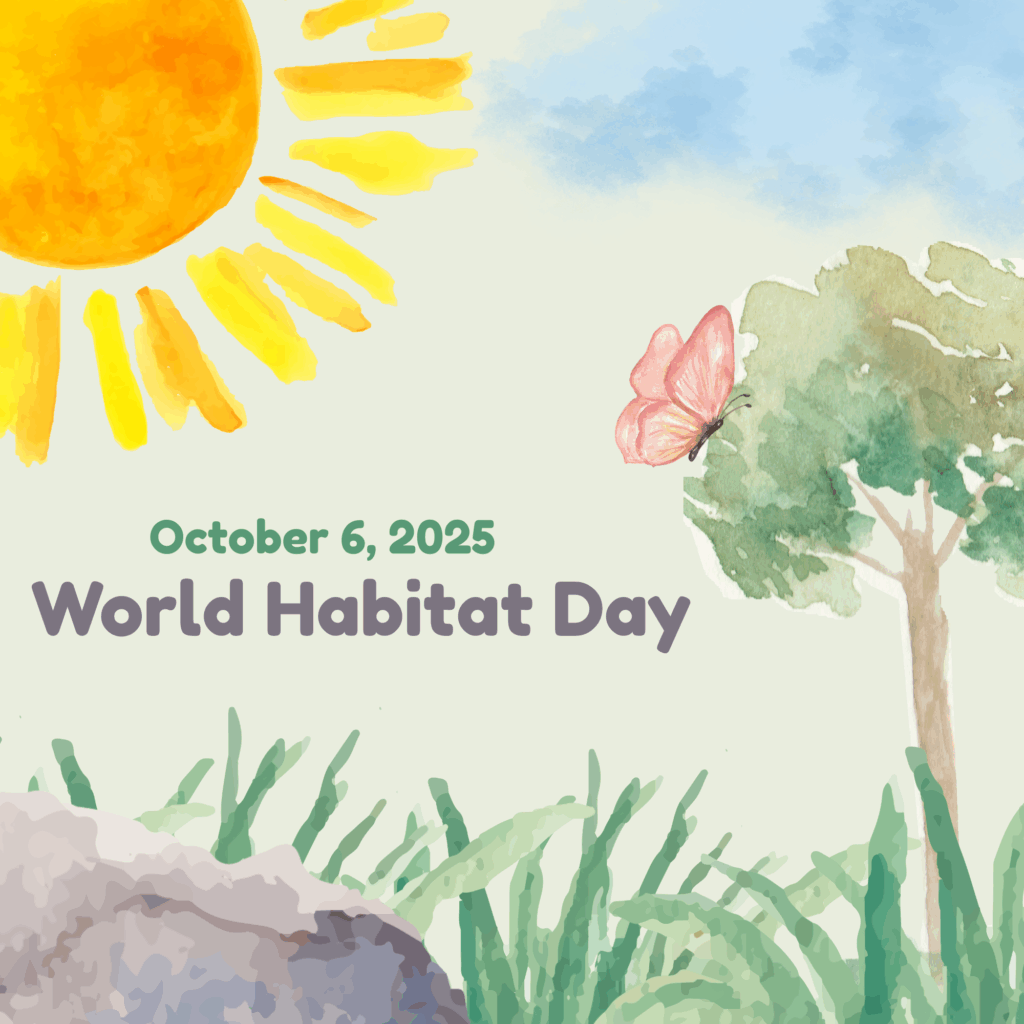
In 1985, the United Nations declared the first Monday of every October as World Habitat Day, with the aim of reflecting on the state of our towns and cities, and the fundamental human right to adequate shelter. The first celebration took place in 1986 under the theme “Shelter is My Right.” Since then, World Habitat Day has grown into a powerful platform for raising awareness about housing, urbanization, and sustainable development.
The day acknowledges that as the global population increases and cities expand, humanity must address both the opportunities and challenges of urban life. Adequate housing is not a privilege—it is a basic necessity linked directly to human dignity, safety and well-being.
Importance of the Day
More than half of the world’s population now lives in urban areas, and by 2050, this number is projected to reach nearly 70%. Urban growth has brought progress, innovation and cultural diversity but it has also created serious challenges: slums, homelessness, environmental degradation and social inequality.
World Habitat Day emphasizes the importance of sustainable cities and communities, one of the key Sustainable Development Goals (SDG 11). It pushes governments, organizations and citizens to ensure that every person has access to safe housing, clean water and green spaces. Without this, societies cannot achieve true peace or prosperity.
The Human Dimension
At its heart, World Habitat Day is about people. A home is not just a physical structure; it is where love grows, children feel safe and communities thrive. Imagine the difference between a child raised in a secure, healthy home with space to learn and play, versus one growing up in overcrowded slums with no clean water or safe streets. The quality of habitat shapes not only health and education but also hope.
Climate change adds another layer to the challenge. Floods, storms and rising sea levels disproportionately affect vulnerable populations, often displacing entire communities. This makes the call for sustainable, climate-resilient housing more urgent than ever.
Humanize Touch: Stories of Change
Consider a family living in informal housing who gain access to a sustainable housing project with solar power and clean water. Their health improves, their children study better, and the cycle of poverty begins to break. Or imagine a city that invests in green transport and affordable housing—suddenly, thousands of people live healthier, more connected lives.
These are not abstract ideas—they are transformations happening in cities around the globe. Each safe and sustainable home built is a step toward dignity and equality.
UNESCO BMW’s Involvement
At UNESCO BMW, we believe that creating sustainable habitats is deeply connected with inner well-being. Our ReWIND initiative links environmental sustainability with mental health awareness, helping communities understand that a healthy planet and a healthy mind go hand in hand.
Through campaigns and partnerships, UNESCO BMW advocates for urban planning that prioritizes people, mental peace, and sustainable futures. Building better habitats means creating spaces where people can live not only safely but also joyfully.
Conclusion
World Habitat Day reminds us that shelter is not just a roof—it is the foundation of dignity, opportunity, and equality. On this October 5, let us reaffirm our responsibility to build sustainable, inclusive, and resilient cities for all. Because when we build better homes, we build better futures.
By: Jannatul