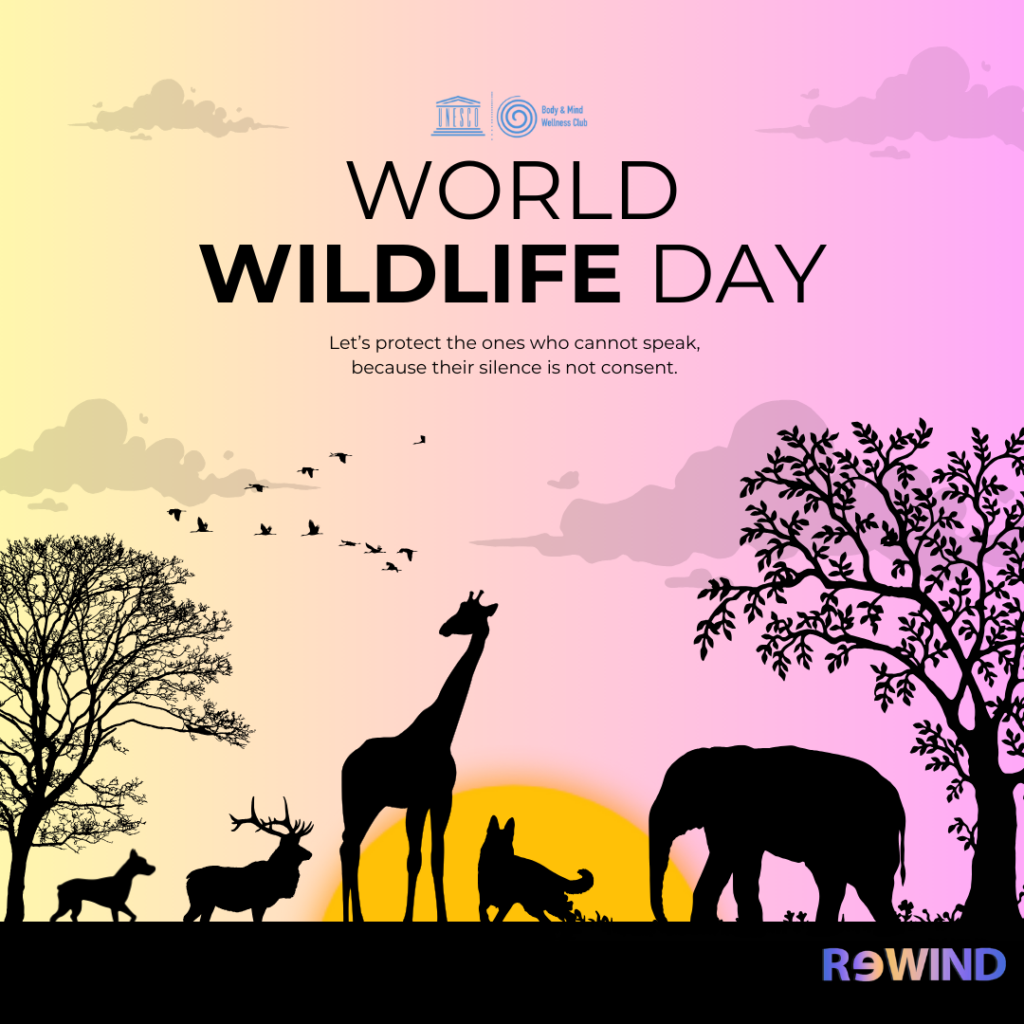
Protecting the Silent Guardians of Our Planet
Wildlife, ranging in size from the tiniest bug to the greatest mammal, provides the foundation of ecosystems that support human life. However, as modern life speeds up, wildlife is being forced farther and farther to the outskirts, where it faces threats from environmental degradation, climate change, and human activity. Every year on March 3, the world observes World Wildlife Day as a reminder that preserving wildlife is a shared obligation rather than a personal choice.
The Origin of World Wildlife Day
On December 20, 2013, during its 68th session, the United Nations General Assembly formally declared December 20 to be World Wildlife Day. In order to align with the 1973 signing of the Convention on International Trade in Endangered Species of Wild Fauna and Flora (CITES), the date of March 3rd was purposefully chosen. At the 16th Conference of the Parties (CoP16) to CITES, which was convened in Bangkok in 2013, Thailand proposed the creation of World Wildlife Day. Thailand pushed for a globally recognized day to raise awareness of the critical need to conserve animals from becoming extinct, especially due to illegal trade and habitat loss, as the year celebrated the 40th anniversary of the Convention.
The idea was approved by the UN General Assembly, and on March 3, 2014, World Wildlife Day was formally celebrated for the first time. In addition to promoting group efforts to fight wildlife crime and advance sustainable use of natural resources, the day has since provided a worldwide forum for highlighting the inherent, ecological, and economic importance of wildlife.
Wildlife Under Threat: A Global Reality
The situation facing wildlife, both plant and animal, is unparalleled. It is predicted that around a million species are in danger of going extinct, many of them in the upcoming decades. Since human activity is the main cause of the current rate of biodiversity loss, which greatly surpasses natural levels, this is not only an environmental problem but also a warning to humanity.
Five main factors have shaped the crisis. Because forests, marshes, and grasslands are being cut down for urbanization and agriculture, habitat loss continues to be the main factor. Overexploitation causes species to decline more quickly than they can recover, including unsustainable hunting and fishing practices. Temperature increases and extreme weather occurrences are two ways that climate change exacerbates demands. Ecosystems are contaminated by pollution, especially plastic and chemical waste. Lastly, invasive species cause habitat disruption and extinction.
Important ecological services that directly sustain human survival, such as crop pollination, clean water, and carbon absorption, are threatened by the extinction of important species, which also upsets food webs. Public health and the world economy are at greater risk when wildlife populations fall, and important ecosystems like freshwater habitats and wetlands decline. Therefore, conservation is no longer optional; it is necessary to keep life on Earth going.
| Category | Approx. Species Assessed | Threatened (VU, EN, CR) | Extinct (EX) | Notes |
| Mammals | ~6,500 | 1,300+ | 160+ | Habitat loss & hunting are major threats |
| Birds | ~11,000 | 1,400+ | 160+ | Island species are highly vulnerable |
| Reptiles | 12,000+ | 1,800+ | Increasing | Climate change & habitat destruction |
| Amphibians | 8,000+ | 3,000+ | Growing | Most threatened vertebrate group |
| Fish (Marine & Freshwater) | 18,000+ | 3,000+ | Rising | Freshwater ecosystems are most impacted |
| Insects | Limited assessed | 40% of assessed species are threatened | Data limited | Pollinators in sharp decline |
| Plants | 40,000+ | 16,000+ | Hundreds | Deforestation is a key driver |
The Power of Awareness and Collective Responsibility
The first step in preserving wildlife is individual responsibility, but its sustainability depends on teamwork. When adopted by communities and countries, meaningful activities, like raising awareness of conservation, promoting ethical and sustainable products, cutting waste, and supporting laws that protect wildlife, have a long-lasting effect. UNESCO Body and Mind Wellness (UNESCO BMW) affirms that environmental conservation starts with responsible living and inner awareness, which is in line with UNESCO’s mission and the UN Sustainable Development Goals of 2030. The organization highlights the close relationship between biodiversity and human well-being by promoting eco-conscious behaviors, youth engagement, mindful lives, and sustainability practices through programs like the ReWIND program. Through fostering resilient and self-aware people who “think globally and act locally,” the organization contributes to the development of communities that value the environment, protect ecosystems, and actively promote wildlife conservation. World Wildlife Day serves as a reminder that wildlife cannot speak for itself and that human compassion, well-informed decision-making, and coordinated international action based on both personal equilibrium and shared responsibility are essential to its survival.
References
https://cites.org/eng/disc/what.php