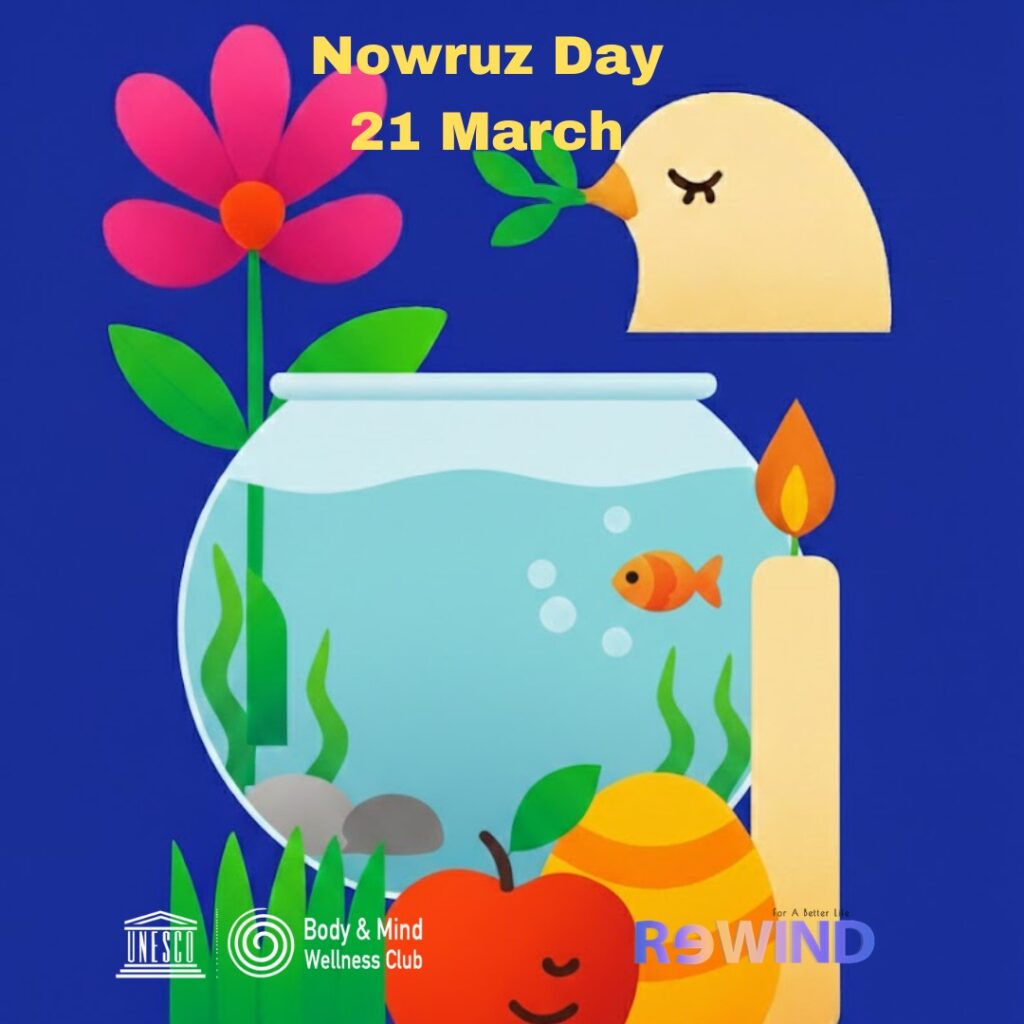
Nowruz, also spelled Novruz, Navruz, Nooruz, Nevruz, or Nauryz, meaning “new day” in Persian, is far more than just the start of a new year: it is an ancient celebration of life, rebirth, and the triumph of light over darkness. Nawruz is a vibrant and meaningful celebration observed by millions of people across different regions of the world. Families and communities come together to celebrate this occasion with joy, reflection, and gratitude.
Historical and cultural significance
Ancient origins
Nowruz’s origins can be traced back to the ancient Persian empire and the Zoroastrian calendar, where it marked one of the holiest days of the year. Originally a sacred time to celebrate the rebirth of nature, Nowruz evolved over centuries into a secular festival embraced by numerous ethno-linguistic and cultural communities. Its enduring appeal lies in its powerful symbolism: the triumph of light over darkness and the promise of new beginnings, both in nature and in the human spirit.
A symbol of unity and diversity
As a celebration of the renewal of life, Nowruz has always been more than a seasonal change. It is a festival that reinforces bonds within families, communities, and even between nations. Today, Nowruz is celebrated by people from various religious and cultural backgrounds, reflecting a universal desire for renewal, peace, and prosperity. Its international recognition by UNESCO and the United Nations underlines its significance as a unifying cultural event in our increasingly interconnected world.
Regional Variations
Although the core values of Nowruz remain the same, its celebration varies across regions:
- Iran: Nowruz is marked by the traditional Haft-Sin table and Chaharshanbe Suri, with strong emphasis on family gatherings, poetry, music, and cultural rituals.
- Afghanistan: Celebrated as both a cultural and agricultural festival, Nowruz includes family feasts, traditional dances, and marks the start of the farming season.
- Azerbaijan and Uzbekistan: Known for large public celebrations, traditional games, communal meals, and vibrant street performances.
- Other Regions: Across the Caucasus, Central Asia, and parts of the Balkans, Nowruz unites communities in celebrations centered on renewal, heritage, and shared traditions.
Promoting peace and cultural diversity
In a rapidly changing world, Nowruz serves as a reminder of our shared human heritage. It champions the values of tolerance, cultural diversity, and peace—principles that resonate deeply in our modern, interconnected society. By celebrating Nowruz, communities reaffirm their commitment to preserving ancient traditions while also embracing contemporary influences that enrich their cultural tapestry.
UNESCO and Global recognition
As it contributes to cultural diversity and friendship among peoples and different communities, Nowruz fits closely with UNESCO’s mandate.
In particular with relation to the 2003 Convention for the Safeguarding of the Intangible Cultural Heritage, Nowruz was inscribed as an element in 2009, and extended in 2016, on the Representative List of the Intangible Cultural Heritage of Humanity, at the joint initiative of Afghanistan, Azerbaijan, India, Iran (Islamic Republic of), Iraq, Kazakhstan, Kyrgyzstan, Pakistan, Tajikistan, Turkey, Turkmenistan and Uzbekistan.
In 2010, the “International Day of Nowruz” was proclaimed by the United Nations General Assembly in its resolution A/RES/64/253. This Resolution welcomes the efforts of Member States where Nowruz is celebrated to preserve and develop the culture and traditions related to Nowruz, and encourages Member States to make efforts to raise awareness about Nowruz and to organize annual events in commemoration of this festivity.
A beacon of renewal, unity, and cultural diversity
Nowruz is more than just a calendar event: it is a vibrant, living tradition that celebrates the renewal of nature and the human spirit. From the detailed rituals of cleaning and the meticulous setting of the Haft Sin table to the communal feasts, bonfire jumps, and street festivals, Nowruz invites millions around the world to leave behind the old and welcome the new with hope and joy.
As families gather to celebrate, as communities share in the rich cultural heritage of their regions, and as global institutions recognize and promote this ancient festival, Nowruz stands as a beacon of renewal, unity, and cultural diversity. It is a day to reflect on the past, celebrate the present, and look forward to a future filled with promise: a true celebration of the timeless human spirit.
By embracing the spirit of Nowruz, we celebrate life, renewal, and the unity of cultures across the world.
By Fiza Faryad