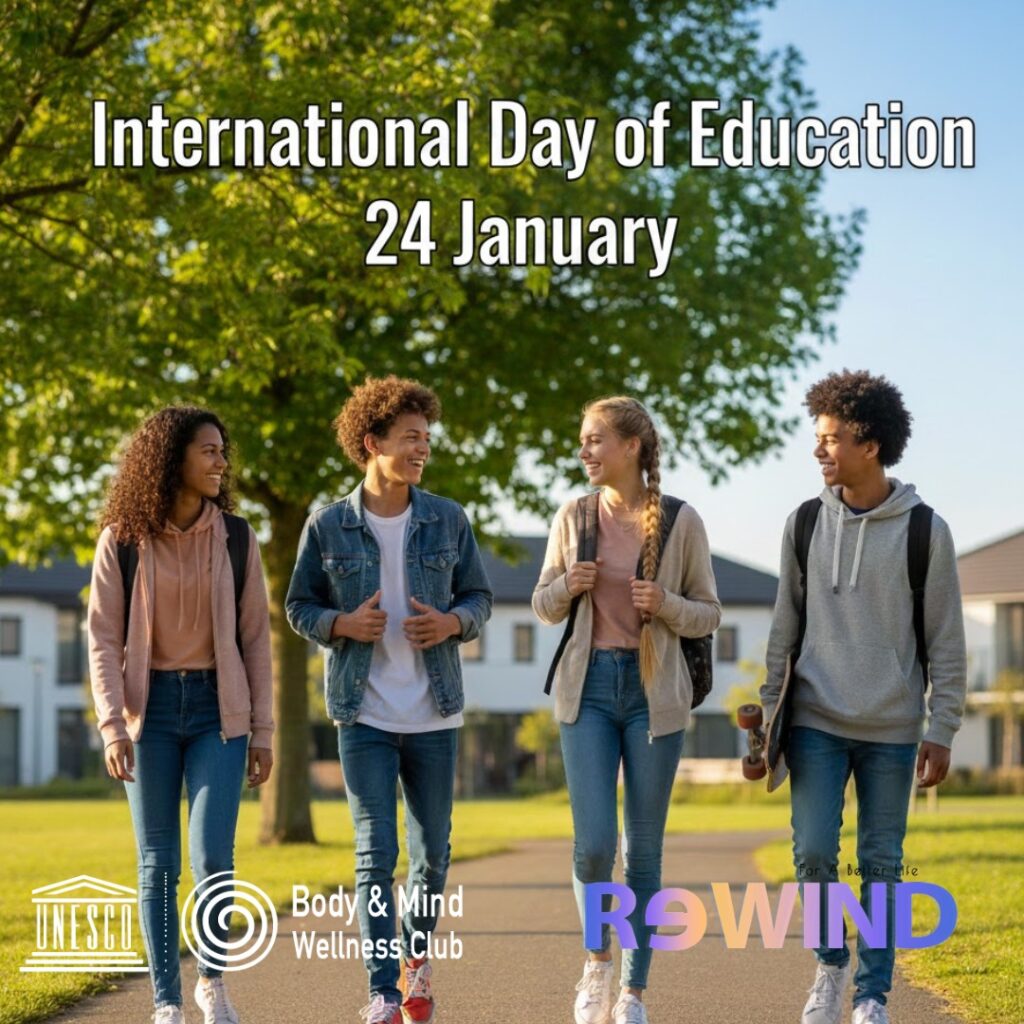
Every year on January 24, the global community pauses to recognize a fundamental truth: education is not a luxury; it is a human right. Established by the United Nations General Assembly in 2018, the International Day of Education serves as a powerful reminder that learning is the primary engine behind peace, equity, and sustainable development.
In a world facing rapid technological shifts and complex social challenges, this day calls us to protect and prioritize the most powerful tool we have for change.
Why Education Matters More Than Ever
Education does far more than just put books in hands. It is the catalyst for a better world in three distinct ways:
- Economic Empowerment: It breaks the cycle of poverty by providing the skills necessary for the modern workforce, opening doors to innovation and financial stability.
- Social Cohesion: By teaching values of tolerance and global citizenship, education helps bridge cultural divides and fosters a more peaceful coexistence.
- Breaking Barriers: For marginalized communities, education is the ultimate equalizer, offering a voice and a seat at the table for those who have been historically left behind.
The Call to Action
While we celebrate how far we’ve come, January 24 is also a day to confront the work that remains. Millions of children and adults still face barriers to learning, including conflict, poverty, and gender discrimination.
This day acts as a global “call to action” for governments and individuals alike to invest in SDG 4 (Quality Education)—ensuring that learning environments are not only safe and inclusive but also transformative.
Leading the Charge: UNESCO BMW
UNESCO BMW is an organization dedicated to closing the global educational gap. By focusing on the needs of the 21st-century learner, they are turning the vision of “education for all” into a reality through:
- Vocational Training: Providing practical skills for immediate economic impact.
- Digital Literacy: Ensuring no one is left behind in an increasingly online world.
- Lifelong Learning: Promoting the idea that education doesn’t end with a diploma but continues throughout a lifetime.
- The Vision: UNESCO BMW dreams of a world where every individual has access to lifelong learning opportunities that foster social justice and build resilient, peaceful communities but also focusing on the mental and physical health of the individual.
Beyond the Books: How the RɘWIND Program Tackles Exam Stress and Anxiety:
In many educational settings, the focus is often on the content of the curriculum, but UNESCO BMW (Body and Mind Wellness) recognizes that a student’s mental state is just as critical for success as the books they study. A standout feature of their work is the RɘWIND Program, which is specifically designed to provide students with a “mental toolkit” to handle the pressures of academic life.
What is the RɘWIND Program?
The RɘWIND program is a specialized wellness initiative that teaches teenagers and young adults (typically ages 14–18) how to manage the emotional highs and lows of the school year. It is structured as a series of workshops (ranging from “Fast Learner” 1-week sessions to “Basic Master” 8-week certifications) that blend neuroscience with mindfulness.
These sessions our extremely helpful in helping young learners to learn how to manage exam anxiety. When exam season hits, many students experience “brain fog” or paralysis due to high cortisol (stress) levels. RɘWIND addresses this through:
- Stress Management Techniques: Students learn practical tools like controlled breathing and self-scanning to calm the nervous system before an exam or presentation.
- Balancing the “Nervous Systems”: The program educates students on the difference between the sympathetic nervous system (fight or flight) and the parasympathetic system (rest and digest), teaching them how to manually “switch” into a calm state.
- Mental Focus & Clarity: By practicing mindfulness meditation, students improve their concentration, which directly translates to better performance on high-stakes tests like the GRE or finals.
- Physical Releases: The program even teaches simple physical actions—like specific hand or wrist massages—to release tension that builds up during long hours of studying.
- Student Impact: Many participants report that after the program, they no longer feel “irritated” by school-related stress and feel empowered to reclaim their inner peace when they start to feel overwhelmed.
In conclusion, education is the cornerstone of a better world. As we observe International Day of Education, let’s recommit to supporting the systems and organizations that make learning accessible to everyone, everywhere.
Lilianny Oliveira
Sources:
https://www.un.org/en/observances/education-day
https://www.unesco.org/en/days/education
https://www.google.com/search?q=https://www.unescobmw.org/2024/12/14/rewind-for-teens/