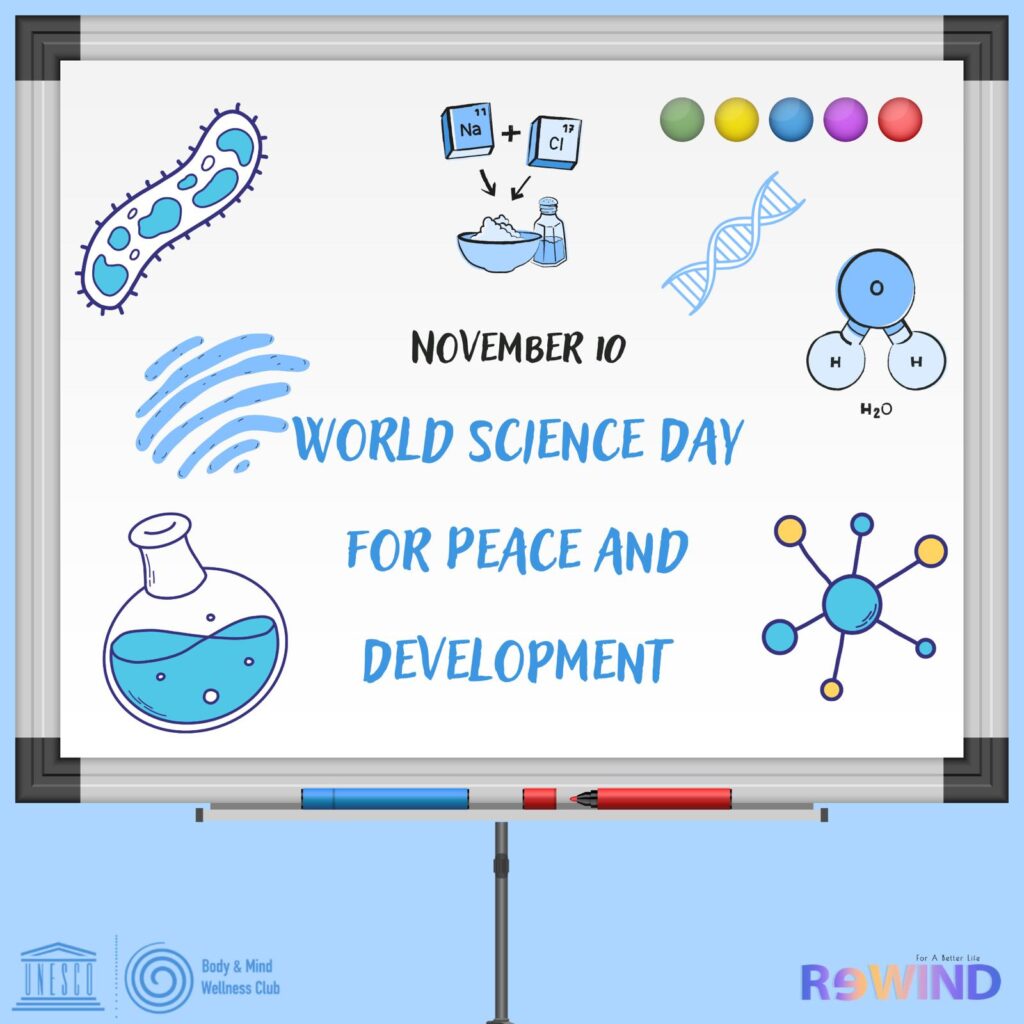
World Science Day for Peace and Development, recognized annually on the 10th of November, emphasizes the crucialness of science for the development of the world. Science is more closely related to society than many realize, and the general public can play a role in science by participating in debates concerning scientific issues. In essence, this day aims to keep citizens in “the know” on scientific discoveries as citizens are the fabric of democracy.
Furthermore, this day celebrates science centers and museums across the world that silently nurture creativity in young minds, inspire students to learn more about STEM related fields, increase literacy especially in scientific topics, and positively influence education. It’s important to remember that youth are tomorrow’s future leaders, and their curiosity now can help to increase the world’s knowledge later.
Origin
The World Science Day for Peace and Development was created by the UNESCO General Conference in 2001, with the goal of reaffirming the international duty towards using science responsibly to better understand the world around us and connecting society along with science. (Note: the commitment was made at the UNESCO-ICSU World Conference on Science in Budapest, in the year 1999.)
Since its adoption, the day has helped secure international funding for science projects and programs. The first World Science Day for Peace and Development was celebrated in 2002 on the 10th of November and involved governmental/non-governmental organizations, scientific research establishments, other associations, UNESCO national commissions, the press, and schools.
UNESCO BMW’s Involvement
UNESCO BMW is a strong supporter of scientific research and the museums that foster curiosity in young individuals. We, too, hold multiple opportunities specifically catered towards youth engagement to cultivate creativity. We strongly encourage youth to join our organization in a sector that corresponds to their interests. Some of the initiatives we have long-term commitments to include: sustainability, preserving ecosystems, inner-peace/self esteem building, meditation for wellness, women empowerment, promotion of literature, etc. Our website also holds valuable resources for youth including an article written by a teenager herself on the ways she copes with stress that could help out others. Furthermore, we have held art competitions in the past to recognize the hard word of youth in the art industry in specific.
By: Vallerie Kalekar