Early Life and Activism
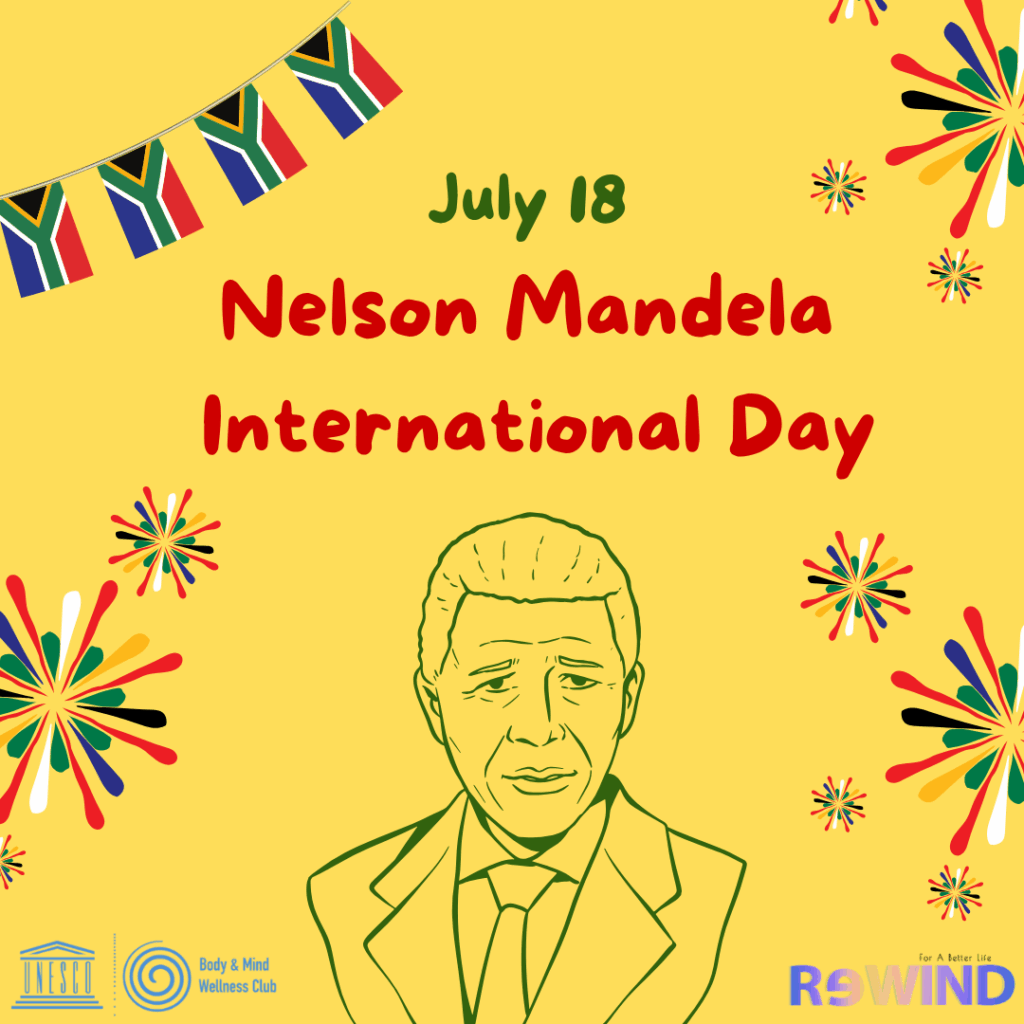
In November 2009, to commemorate the contribution of the former President of South Africa to the culture of peace and freedom, the UN General Assembly resolved to declare 18 July “Nelson Mandela International Day”. It is the World Day to commemorate the life and legacy of Nelson Mandela. Resolution recognises Mandela’s values and devotion to the cause of humanity in the prevention and resolution of conflict, race relations, protection and promotion of human rights, reconciliation, gender equality and other vulnerable groups’ rights, the fight against poverty and promotion of social justice. The resolution remembers his contribution to the cause of democracy everywhere and the promotion of the culture of peace everywhere. As he once stated, “To be free is not merely to cast off one’s chains, but to live in a way that respects and enhances the freedom of others.” He is still an inspiration, and his teachings are still legendary for teaching people to spread love instead of hate and dignity instead of discrimination.
Legacy and Triumph
Mandela spent 27 years in prison for his activism, but his determination and resilience only grew stronger. After his release in 1990, he played a crucial role in transitioning South Africa to democracy and became the first black president of the country in 1994. Mandela’s legacy extends far beyond his presidency. He fought for education and children’s rights. Promoted conflict resolution and peacebuilding. He also partners for Girls’ and women’s education. One of his most important roles was advocating for HIV/AIDS awareness and treatment.
UNESCO BMW’s Involvement
UNESCO BMW has always been an outstanding advocate for environmental action. One of UNESCO BMW’s main initiatives is the promotion of environmental sustainability. We garden regularly in Frederick, Maryland (our headquarters). We have also adopted a road in Frederick as part of the Adopt-a-Road campaigns to motivate civilians to be responsible for the cleanliness of a road. We also have given lectures on eco-friendly strategies anyone at any age can implement in their lives and support eco-friendly companies.
UNESCO BMW’s Vision
Our vision centers around making our communities healthier through eco-friendly decisions such as a cut-back on plastic consumption, an increase in recycling, and sponsoring eco-companies. We strive to support all initiatives focused on biodegradable concepts that encourage resilience in hopes of creating a unified nation all set to work together towards a sustainable future. We are open to everyone to join our programs on the education of the environment, regardless of their race, ethnicity, gender, etc, to preserve our world for future generations.
By: Seemab Arif
Sources: